

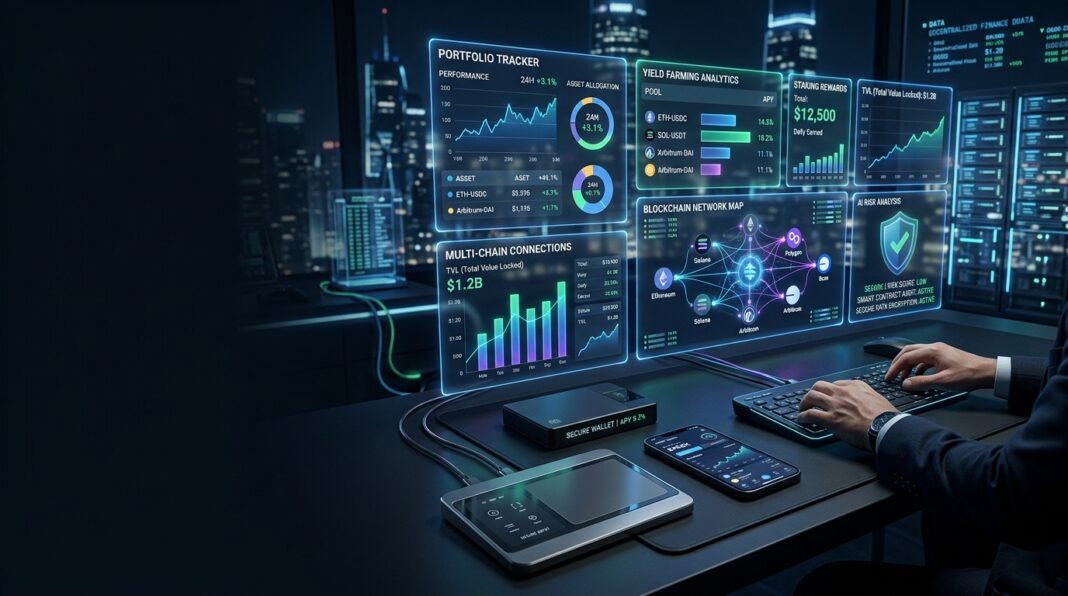

Decentralized Finance, or DeFi, keeps growing and changing. It offers amazing chances to earn interest, trade, and even borrow money without needing a bank. But with all this freedom comes some complexity. It is easy to feel a bit lost with so many different platforms and options out there. That is why having the right DeFi tools is not just nice to have; it is truly essential in 2026. These tools help you keep track of your money, find the best opportunities, and most importantly, stay safe in a space that can sometimes feel like the wild west.

The Foundation: Secure Your Crypto Wallets
Before you even think about putting your money into DeFi, you need a solid place to store your crypto. Your wallet is the gateway to all things DeFi. Think of it as your bank account and your identity rolled into one. Choosing the right one is critical for managing your investments.
In 2026, many people use different wallets for different reasons. Some prefer the highest security for their main holdings, while others need quick access for everyday transactions. Knowing the differences helps you pick wisely.
Hardware Wallets for Top-Tier Security
Hardware wallets are physical devices that keep your private keys offline. This means they are largely safe from online hacks and malware. Ledger Flex is a top pick in 2026 for its strong security and easy-to-use experience, supporting many different digital assets. Trezor is another popular choice, especially for those who like open-source transparency in their security tools.
You might use a hardware wallet for your long-term savings or significant investments. When you want to make a transaction, you plug it in and confirm the details directly on the device. This extra step adds a lot of protection.
Software Wallets for Daily DeFi Interactions
Software wallets are apps on your phone or computer, or browser extensions. They are super convenient for connecting to decentralized applications (dApps) and making quick trades. MetaMask is still a benchmark for DeFi activity, especially on Ethereum and its related networks. Trust Wallet is another leading software wallet, known for its mobile convenience and support for many blockchains and NFTs.
Even though software wallets are handy, they carry more risk because they are connected to the internet. Many experts suggest pairing a software wallet like MetaMask with a hardware wallet for added security, especially for larger sums. If you want a full overview, you can check out Your Guide to Choosing the Right Crypto Wallet in 2026.
Seeing the Whole Picture: DeFi Portfolio Trackers
Once you start using different DeFi protocols, your crypto can end up spread across many platforms and blockchains. Keeping track of everything manually becomes nearly impossible. This is where DeFi portfolio trackers become your best friend. They pull all your positions into one easy-to-read dashboard.
In 2026, these tools are essential, not optional, for many reasons. First, they help with tax reporting, as regulators are getting stricter about crypto transactions. Second, they solve the problem of fragmented portfolios, showing you exactly what you own across various Layer 2 networks, Solana, and other DeFi protocols. A good tracker will decode your on-chain activity, show your positions clearly, and track performance over time.
For example, instead of just seeing a “UNI-V3-POS” token, a good tracker will tell you that you have a Uniswap V3 position providing liquidity on a specific trading pair, including your uncollected fees.
Some of the top DeFi portfolio trackers in 2026 include:
- Zerion: Known for its polished interface and support for many EVM chains. It offers detailed breakdowns of token holdings, DeFi positions, and NFTs, even including a swap feature.
- Zapper: A long-standing dashboard that tracks across many EVM chains and has expanded into NFT tracking. It is a strong free choice for on-chain DeFi users.
- DeBank: Specializes in granular, wallet-centric views of assets, especially for complex positions like lending and liquidity providing across numerous chains.
- CoinStats: A versatile tracker that covers CeFi, DeFi, and NFTs, allowing you to connect many wallets and exchanges in one place.
When picking a tracker, consider its chain coverage, how well it recognizes different protocols, and its yield tracking accuracy. The best ones support over 20 chains, including Ethereum, Arbitrum, Polygon, Solana, and Avalanche.
Optimizing Your Earnings: DeFi Yield Aggregators
DeFi offers many ways to earn passive income, like lending, staking, and providing liquidity. But finding the best rates and moving your funds around manually can be a lot of work. This is where DeFi yield aggregators come in. These tools automate the process of finding and optimizing yields across different DeFi protocols.
Yield aggregators simplify complex staking and liquidity provision. They automatically compound your earnings, rebalance your portfolio, and allocate your funds to strategies that aim for the best returns. This means you do not have to constantly check different platforms or manually claim and restake your rewards. They help reduce transaction costs by grouping operations together and provide easy ways to deposit and withdraw your assets.
For both new and experienced DeFi users, aggregators offer a way to focus on the results without needing to manage every small detail. Some notable yield aggregators in 2026 are:
- Yearn Finance: One of the first protocols to automate yield farming. Yearn focuses on sustainable profits and has a strong track record, having gone through many audits.
- CIAN Yield Layer: This aggregator is growing fast in 2026. It operates across seven blockchain networks and combines various yield strategies like lending, liquid staking derivatives, and restaking.
- Beefy Finance: A decentralized, multi-chain yield optimizer that serves retail users.
- Pendle Finance: While often grouped with aggregators, Pendle is unique. It lets users split yield-bearing assets into Principal Tokens and Yield Tokens, allowing for fixed interest rates or leveraged exposure to future yields.
Yield aggregators can help diversify your income and create more stable returns, especially when used with stablecoins. However, it is important to remember that no DeFi yield strategy is 100% risk-free.
Staying Safe: DeFi Security and Risk Assessment Tools
The DeFi space, while innovative, has also seen its share of security incidents. In the first two months of 2026 alone, attackers stole over $112.5 million from DeFi protocols. This highlights why security and risk assessment tools are absolutely vital for anyone involved in DeFi. Global regulators are also becoming more active, so understanding compliance is increasingly important for protocols and users alike.
These tools help identify vulnerabilities, monitor transactions, and detect threats before they lead to losses. They protect smart contracts, wallets, and user activity.
Auditing and Monitoring Tools
Before any DeFi protocol launches, it should undergo multiple independent audits. These audits check the smart contract code for flaws that attackers could exploit. Even after launch, constant monitoring is needed. Tools like Hypernative, Forta, and Guardrail provide real-time threat detection. They can spot suspicious activity and alert you before a breach becomes public, helping to prevent significant losses.
Risk Scoring and Analytics
It is hard to know the risk of every DeFi protocol or transaction on your own. Risk assessment tools help by providing scores or analyses of potential vulnerabilities. For instance, Phalcon Compliance offers real-time transaction monitoring and AI-driven risk scoring, identifying high-risk signals before transactions execute.
DeFi Safety DAO aims to create a community-driven platform to assess smart contract, centralization, and financial risks, helping users make smarter decisions. DefiLlama is another powerful tool for analytics, tracking Total Value Locked (TVL) across many chains. This gives a neutral view of where capital is flowing and helps identify good lending rates and yield farming opportunities.
Transaction Monitoring and Forensics
Tools like AnChain AI use AI to find and fix vulnerabilities, identify suspicious transactions, and combat illegal funds. They use “Know Your Wallet” technology to manage digital asset risk and compliance. Arkham Intelligence helps link blockchain addresses to real-world entities, which can be useful for tracking movements of large holders and anticipating market volatility.
Choosing Your DeFi Toolkit: Key Considerations
With so many DeFi tools out there, how do you choose the right ones for you? It depends on your specific needs, how much capital you are managing, and your comfort level with technology.
- Multi-chain Support: DeFi is a multi-chain world in 2026. Make sure your chosen tools support all the blockchains you use, whether it is Ethereum, Solana, Polygon, or any other Layer 2 network. A tool that only covers one chain will give you an incomplete picture.
- Security and Audits: Always prioritize tools with strong security track records and clear audit histories. For yield aggregators, transparent strategy code helps build trust and reduce risk. For wallets, certified Secure Elements are a must for hardware options.
- User Interface and Ease of Use: A powerful tool is only useful if you can understand and operate it. Look for clean, intuitive interfaces that make managing complex DeFi positions straightforward.
- Cost and Features: Many excellent DeFi tools offer free tiers, which are often enough for most users’ needs. However, some premium features or institutional-grade tools might require a subscription. Decide what features you truly need versus what is a nice bonus.
Comparison of Essential DeFi Tools
Here is a quick look at some different types of DeFi tools and what they are best for:
| Tool Type | Example Tool | Main Use | Key Feature | Cost/Model |
|---|---|---|---|---|
| Portfolio Tracker | Zerion | Unified view of DeFi assets across chains | Detailed breakdowns, built-in swap, NFT support | Free tier with premium subscription |
| Yield Aggregator | Yearn Finance | Automates yield farming strategies | Auto-compounding, rebalancing, audited strategies | Fees on profits |
| Security/Risk Tool | Phalcon Compliance | Real-time transaction risk scoring | AI-driven analysis, identifies high-risk signals | API-based, likely subscription |
Essential DeFi Tools: Frequently Asked Questions
What is the most important DeFi tool for beginners?
For beginners, the most important tools are a secure non-custodial wallet like MetaMask or a hardware wallet, and a reliable DeFi portfolio tracker. A wallet allows you to interact with DeFi, and a tracker helps you understand what you are doing and how your assets are performing.
How do DeFi tools get information from my wallet?
Most DeFi tools get information by reading public blockchain data associated with your wallet address. They do not need your private keys or access to your funds to show you your balances and positions. You simply connect your public address to the tool.
Are free DeFi tools safe to use?
Many free DeFi tools are safe and widely used, like the core features of Zapper or DeBank. They only read public data. However, always be careful about which tools you connect your wallet to, and never give out your private keys or seed phrase to any website or application.
What are the biggest risks in DeFi, and how can tools help?
The biggest risks in DeFi include smart contract bugs, hacks, phishing attacks, and impermanent loss in liquidity pools. Tools help by providing security audits, real-time monitoring, and risk scoring to identify vulnerabilities. Portfolio trackers help you monitor your positions for unexpected changes.
How often should I check my DeFi portfolio?
How often you check your DeFi portfolio depends on your investment strategy. If you are actively yield farming or trading, you might check daily or even hourly. For more passive, long-term investments, a weekly or bi-weekly check with your portfolio tracker might be enough to monitor performance and adjust strategies if needed.
Navigating the DeFi world can feel overwhelming, but with the right set of tools, it becomes much more manageable and secure. From protecting your assets with strong wallets to optimizing your returns with aggregators and staying informed with trackers and security monitors, these crypto tools are your allies. Take the time to understand them, choose wisely, and always prioritize security in your DeFi journey. This way, you can participate confidently in the exciting future of decentralized finance.
Crypto Tools