

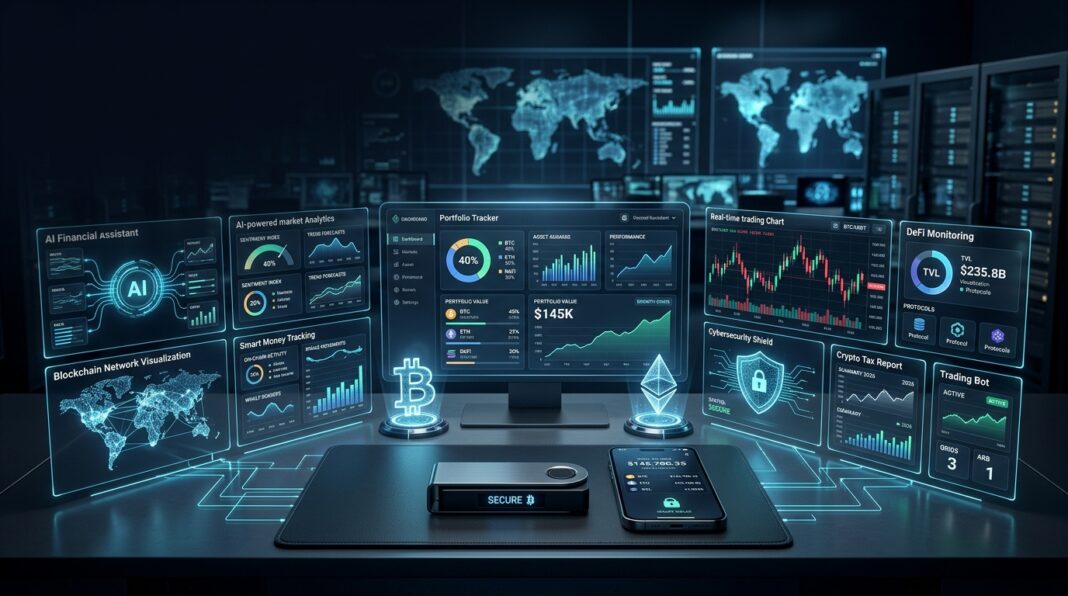

The world of cryptocurrency moves fast. Staying on top of your investments, understanding market trends, and securing your assets can feel like a full-time job. Thankfully, you don’t have to do it all manually. A solid set of crypto tools can make a huge difference in how effectively you manage your digital assets in 2026. These tools can help you track your portfolio, analyze market data, secure your funds, and even simplify your tax obligations.
Whether you’re just starting out or you’re a seasoned trader, having the right resources at your fingertips is key to making informed decisions. We’re not talking about just one magic tool, but rather a collection of utilities that serve different purposes. Think of it as building your own personalized crypto command center.
Getting a Clear Picture: Portfolio Trackers and Analytics Tools
One of the first things you’ll want is a way to see all your crypto holdings in one place. Juggling assets across multiple exchanges and wallets can get confusing. That’s where portfolio trackers come in handy. These tools connect to your various accounts and give you a consolidated view of your total holdings, their current value, and your overall performance.
Beyond simple tracking, analytics tools offer deeper insights. They help you understand market trends, analyze on-chain data, and identify potential opportunities. For example, tools like Glassnode and Dune Analytics allow you to dive into blockchain data, showing you things like transaction volumes, active addresses, and market sentiment. This kind of information can help you understand the underlying health of different cryptocurrencies and protocols. For a more in-depth look at how these tools can help, check out Your Guide to Crypto Portfolio Trackers in 2026.
Key Analytics Platforms in 2026
In 2026, several platforms stand out for their ability to provide valuable market intelligence. CryptoScores offers a unique framework for evaluating Web3 projects, scoring them on security, utility, technology, and more. This helps in performing due diligence without needing deep technical expertise. For technical traders, TradingView remains a go-to platform for advanced charting and technical analysis. It provides a wide array of indicators and drawing tools to help you analyze price action.
When you need to understand the flow of large amounts of crypto, Glassnode is essential for institutional on-chain data. For those who want to build custom queries and dashboards directly from blockchain data, Dune Analytics is a powerful option. And if you’re interested in where capital is flowing within decentralized finance (DeFi), DefiLlama is the premier tool for tracking Total Value Locked (TVL) across different blockchains.
Understanding “smart money” movements is also critical. Platforms like Nansen help identify the activity of large, informed investors. For a more comprehensive view of market metrics beyond just price, CoinGecko is an excellent resource, offering data on liquidity, developer activity, and social growth.
| Tool | Primary Use | Key Features | Best For |
|---|---|---|---|
| CryptoScores | Project Evaluation | Scoring system (Security, Utility, Tech, etc.), Due diligence framework | Identifying fundamentally sound projects |
| TradingView | Charting & Technical Analysis | Advanced charts, indicators, drawing tools, social features | Technical traders, market analysis |
| Glassnode | On-Chain Analytics | Macro indicators, network health metrics, holder behavior | Long-term investors, macro analysis |
| Dune Analytics | Custom Data Queries | SQL-based queries, customizable dashboards, community insights | Data enthusiasts, custom research |
| DefiLlama | DeFi Tracking | Total Value Locked (TVL), yield opportunities, cross-chain data | DeFi users, yield farmers |
| Nansen | Smart Money Tracking | Labeled wallets, on-chain insights, “smart money” flow | Identifying informed investor activity |
| CoinGecko | Market Data Aggregation | Price tracking, market cap, volume, news, portfolio tracker | General market research, quick data checks |
Securing Your Digital Assets: Wallets and Security Tools
When it comes to cryptocurrency, security is paramount. Your crypto wallet is your gateway to your assets, and choosing the right one is crucial. Wallets can be broadly categorized into hot wallets (software-based and internet-connected) and cold wallets (hardware devices kept offline).
Hardware wallets like those from Ledger or Trezor are generally considered the most secure for storing significant amounts of crypto long-term. They keep your private keys offline, protected from online threats. For everyday transactions and interaction with DeFi applications, software wallets like MetaMask or Coinbase Wallet are more convenient. Many users opt for a combination: a hardware wallet for secure storage and a software wallet for active trading and DeFi use.
Beyond wallets, blockchain security tools are vital. These can include services that monitor for malicious activity, help in compliance, or analyze smart contract code. Platforms like TRM Labs provide blockchain intelligence to detect suspicious behavior and ensure regulatory compliance. For developers, tools like OpenZeppelin Defender offer security solutions for smart contract deployment and management.
Choosing the Right Wallet in 2026
For 2026, the focus remains on a blend of security and user experience. Ledger wallets, such as the Ledger Nano X or Ledger Stax, continue to be top choices for hardware security, offering robust protection for private keys combined with increasingly user-friendly interfaces. For software wallets, MetaMask remains a dominant force, especially for Ethereum and EVM-compatible chains, serving as a primary interface for DeFi and NFTs. Coinbase Wallet offers a strong self-custody option that integrates well with desktop dApp usage. For those seeking broad multi-chain support with a security-first approach, FoxWallet is a noteworthy option, providing local storage of private keys and extensive network coverage.
Streamlining Your Trades: Exchanges and Trading Bots
Exchanges are where most people buy, sell, and trade cryptocurrencies. In 2026, major exchanges like Binance, Coinbase, and Kraken offer a wide range of features for both beginners and advanced traders. They provide access to numerous trading pairs, often with competitive fees and advanced order types.
For those looking to automate their trading strategies, trading bots can be invaluable. Platforms like Pionex offer built-in bots with no subscription fees for beginners, while more advanced options like 3Commas or Cryptohopper provide greater control and integration across multiple exchanges. These bots can execute trades based on predefined rules, helping you capture opportunities even when you’re not actively monitoring the market.
Simplifying Your Tax Obligations
Crypto taxes can be complicated, especially with a high volume of transactions. Fortunately, specialized crypto tax software can significantly simplify this process. Tools like CoinLedger, Koinly, and ZenLedger connect to your exchanges and wallets, automatically calculating your capital gains and losses. They can then generate the necessary reports for tax filing, often integrating directly with popular tax preparation software like TurboTax.
These platforms help ensure you’re compliant with tax regulations and can even help identify opportunities for tax optimization, such as tax-loss harvesting. For anyone trading cryptocurrencies regularly, investing in a good crypto tax software is a smart move to save time and avoid potential penalties.
Frequently Asked Questions
What is the most important crypto tool to use in 2026?
The most important tool really depends on your individual needs. For beginners, a reliable portfolio tracker and a secure wallet are foundational. For active traders, advanced charting and analytics tools become crucial. For long-term investors, robust on-chain analytics and strong security for asset storage are key.
Can I use free crypto tools effectively?
Yes, absolutely. Many excellent free tools are available, especially for basic portfolio tracking, market data (like CoinGecko), and charting (like TradingView’s free tier). For analytics, platforms like Dune Analytics and DefiLlama offer substantial free access. You can build a very effective toolkit without spending much, especially when starting out.
How do I choose between a hot wallet and a cold wallet?
A hot wallet is connected to the internet, making it convenient for frequent trading and DeFi interactions, but it’s more vulnerable to online attacks. A cold wallet is an offline device, offering the highest level of security for storing large amounts of crypto long-term. Most users benefit from using both: a cold wallet for savings and a hot wallet for active use.
Are trading bots safe to use?
Trading bots can be safe if used responsibly from reputable platforms. They automate trades based on your set parameters. However, they are not foolproof. It’s essential to understand how they work, set realistic expectations, and never invest more than you can afford to lose. Always use bots from well-regarded providers to minimize risks.
How can crypto tax software save me money?
Crypto tax software saves you money by accurately calculating your capital gains and losses, ensuring you don’t overpay taxes due to errors. Additionally, some tools offer features like tax-loss harvesting, which allows you to offset capital gains with capital losses, potentially reducing your overall tax liability. They also prevent costly penalties associated with incorrect tax filings.
Building a comprehensive crypto toolkit is an ongoing process. As the digital asset space continues to evolve, new and improved tools will emerge. By staying informed and experimenting with different resources, you can create a setup that not only protects your assets but also empowers you to make smarter, more profitable decisions in 2026 and beyond. Remember that Mosu Crypto is here to help you stay updated on the latest in the crypto world.
Crypto Tools